

Aristek Systems
Contact Us
background image
background image

CRM development services

Your business evolves. Your CRM should keep up.

We help companies build, modernize, and integrate CRM systems that fit the way teams actually work – with connected workflows and AI-powered customer insights built in.

23+

years in software development

6+

years of AI expertise

150+

in-house employees

Icon of Certificate 1Icon of Certificate 2Icon of Certificate 3Icon of Certificate 4Icon of Certificate 5Icon of Certificate 6Icon of Certificate 7

Something feels off with your CRM – but hard to pinpoint what?

Icon of item 1

Teams barely use the CRM

We review workflows, permissions, UX friction, and day-to-day usage patterns to understand what gets in the way of adoption.

Icon of item 2

Customer information lives in too many places

We assess how CRM, ERP, support, email, and operational systems exchange data – and where disconnected workflows create friction.

Icon of item 3

Too much work still happens manually

We identify where automation can remove repetitive updates, approvals, reminders, and follow-ups.

Icon of item 4

Reporting doesn’t feel reliable

We review dashboards, attribution logic, customer data quality, and reporting consistency across systems.

Icon of item 5

Your CRM no longer supports growth

We assess scalability, architecture limitations, and whether modernization, customization, or rebuilding makes more business sense.

Icon of item 6

Systems don’t talk to each other

We evaluate integrations, sync logic, APIs, and data consistency to eliminate manual work and duplicated information.

Our CRM software development services

  • CRM consulting & planning

    • Analyze current workflows, systems, and operational bottlenecks
    • Review customer lifecycle, reporting, and CRM usage
    • Evaluate CRM platforms, customization options, and integrations
    • Decide whether to optimize, modernize, or build from scratch

    You get: A CRM roadmap built around business priorities and long-term growth.

  • Custom CRM development

    • Define platform requirements and operational needs
    • Design CRM architecture, workflows, and permissions
    • Build custom modules, dashboards, and automation
    • Align CRM functionality with future business growth

    You get: A scalable CRM system tailored to your workflows.

  • CRM migration

    • Assess migration scope, risks, and dependencies
    • Transfer customer records, workflows, and historical data
    • Preserve data quality and integrity during migration
    • Reduce downtime and operational disruption

    You get: A smooth CRM migration without losing business-critical information.

  • CRM integration services

    • Connect CRM with ERP, marketing, finance, support, and analytics tools
    • Design reliable sync logic and API integrations
    • Align customer data across systems and teams
    • Improve reporting consistency and collaboration

    You get: Connected systems that stay in sync without manual effort.

  • AI-powered CRM solutions

    • Identify high-impact AI opportunities in customer workflows
    • Implement lead scoring and predictive customer insights
    • Add automation for repetitive CRM tasks
    • Introduce intelligent recommendations and assistants

    You get: A CRM that helps teams work smarter, not harder.

  • Cloud CRM development

    • Define architecture, integrations, and scalability requirements
    • Build custom CRM features tailored to your sales and support workflows
    • Connect CRM with your existing tools — ERP, marketing, communication platforms
    • Deploy on cloud infrastructure with security and performance built in

    You get: A CRM built around how your business actually works.

  • CRM support & optimization

    • Audit workflows, performance, and system bottlenecks
    • Improve reporting, automation, and integrations
    • Add new functionality as requirements change
    • Support scaling across teams and customer volumes

    You get: A CRM that continues improving as your business evolves.

Why choose Aristek for CRM development services

  • Icon of card 1

    Architecture that scales as operations grow

    Built on 23+ years of enterprise software delivery, including multi-role systems, approval chains, and complex operational workflows.

  • Icon of card 2

    AI that improves customer operations

    6+ years of AI applied to CRM: lead scoring, predictive insights, customer segmentation, intelligent recommendations, and workflow automation.

  • Icon of card 3

    Security and compliance built in

    Role-based permissions, audit logs, encrypted customer data, and secure authentication applied at system level.

  • Icon of card 4

    Reporting teams can actually trust

    Pipeline visibility, attribution logic, customer activity tracking, and operational KPIs structured around one reporting model.

  • Icon of card 5

    Long-term partnership

    87% of clients stayed for 5 years, choosing to build and evolve their systems with us.

  • Icon of card 6

    Proven multi-vendor collaboration

    Smooth integration into complex environments, working alongside internal teams, vendors, and partners without friction.

CRM features we develop

  • Data migration

    Safely transfer customer records, workflows, and business-critical information during CRM upgrades or replacement.

  • Sales pipeline management

    Track opportunities, deal stages, forecasting, approvals, and sales activity without losing visibility.

  • AI-powered insights

    Add predictive scoring, customer recommendations, prioritization, and behavior-based insights.

  • Customer data management

    Bring customer records, interaction history, segmentation, and activity tracking into one place.

  • Analytics & reporting

    Get clearer visibility into sales performance, operations, customer activity, and forecasting.

  • Workflow automation

    Reduce repetitive work through automated lead routing, approvals, reminders, and follow-ups.

  • Mobile CRM access

    Enable role-based CRM access for distributed teams and field operations.

  • Marketing automation

    Support lead nurturing, campaigns, segmentation, and customer engagement workflows.

Image

Plan your CRM with real numbers

Turn assumptions into a practical scope, timeline, and budget you can actually work with.
We’ll help define workflows, integrations, automation priorities, and implementation complexity before development starts.

CRM integrations we deliver

  • Icon of card 1

    ERP systems

    Keep operational and financial data aligned.

  • Icon of card 2

    AI tools

    Automate workflows and enhance customer interactions with intelligent CRM features.

  • Icon of card 3

    Payment & finance systems

    Keep billing and customer records synchronized.

  • Icon of card 4

    Analytics and reporting tools

    Centralize customer insights and forecasting.

  • Icon of card 5

    Customer support platforms

    Improve visibility into tickets and communication history.

  • Icon of card 6

    Communication & productivity tools

    Connect CRM with Microsoft Teams, Slack, Jira and more.

  • Icon of card 7

    Marketing & email platforms

    Connect campaigns, nurturing, and customer communication.

Featured projects

We help companies fix what slows teams down – disconnected tools, messy reporting, manual work, and CRM setups that no longer fit the business.

  • Designing a centralized CRM platform for land sales management

    We analyzed sales workflows, defined CRM architecture, and developed a centralized system to improve customer and transaction management across distributed teams and complex deal pipelines.

    Project results:

    • Improved visibility across land
      sales and customer interactions
    • Faster coordination between agents and operational teams
    • Reduced manual work through centralized CRM workflows
    Explore project
    Slide 0: Preview of project 1
    Slide 0: Image of project 2
  • AI-based behavior analysis & sales forecast for retail

    We structured two years of transactional and behavioral data for a retail company with 3M+ customers, built predictive models for sales forecasting, and delivered actionable insights.

    Project results:

    • 7% increase in visitor-to-buyer conversion rate
    • 15% more data utilized for predictive modeling and accurate forecasting
    • 35% decrease in monthly infrastructure costs
    Explore project
    Slide 1: Preview of project 1
    Slide 1: Image of project 2
  • Re-architecting a legacy data platform with scalable data pipelines

    We audited a fragmented infrastructure, redesigned the data architecture, and replaced brittle manual processes with automated, scalable pipelines that keep customer and operational data consistently in sync.

    Project results:

    • 20-30% infrastructure cost reduction
    • Up to 30% development cost savings
    • 20+ clients onboarded
    Explore project
    Slide 2: Preview of project 1
    Slide 2: Image of project 2
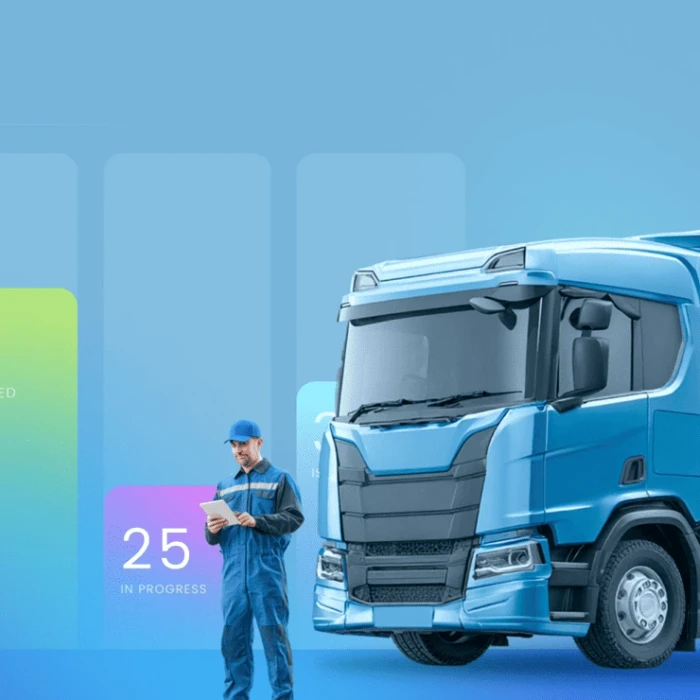
  • Advanced ERP for a US logistics company

    We unified the disconnected operational and customer management workflows of a US transportation company into a centralized system — automating order tracking, client communications, and billing across the entire business.

    Project results:

    • 23% improvement in team productivity across sales, logistics, and operations
    • 31% reduction in operational costs through automated workflows and routing
    • Single system connecting customer records, dispatch, invoicing, and reporting
    Explore project
    Slide 3: Preview of project 1
    Slide 3: Image of project 2

Too much manual work? Reporting hard to trust? Systems not syncing?

Let’s map out a CRM that actually fits the way your business runs.

Our CRM
development process

  • 1. Discovery & business analysis

    Assess workflows, lifecycle, integrations, reporting, and automation opportunities.

    Timeline: 1-3 weeks
    Team: BA, Solution Architect, CRM Consultant

    You get:
    CRM scope, priorities, timeline expectations, and implementation roadmap.

  • 2. Architecture & UX design

    Define CRM structure, permissions, workflows, and user journeys.

    Timeline: 2-4 weeks
    Team: Architect, UX/UI Designer, BA

    You get:
    CRM architecture, workflow logic, permissions model, and wireframes.

  • 3. Development & integrations

    Build CRM modules, APIs, automation, reporting, and AI functionality.

    Team: Backend & Frontend Engineers, QA, DevOps, PM

    What’s included:
    ERP/finance/support integrations, workflow automation, dashboards, and custom CRM functionality.

    You get:
    A working CRM environment ready for testing.

  • 4. Testing & deployment

    Security validation, UAT, integration testing, and phased rollout.

    Timeline: 1-3 weeks
    Team: QA, Developers, Product Stakeholders

    You get:
    A tested CRM system, validated workflows, and launch support.

  • 5. Support & optimization

    Continuous improvements, integrations, reporting, and scaling.

    Engagement: Ongoing or milestone-based
    Team: Developers, QA, CRM Consultants

    You get:
    A CRM that evolves with changing workflows and business growth.

Custom CRM vs. ready-made CRM system

Are you evaluating whether to customize a CRM or stick with an out-of-the-box platform?

A ready-made CRM can work when processes are simple. But once workflows become more complex and systems need to connect, a custom CRM gives you more flexibility in automation, integrations, reporting, and long-term scalability.

Custom CRM system

Ready-made CRM system

AI capabilities

Custom lead scoring, recommendations, predictive insights, and workflow automation tailored to your business

Limited to built-in AI features and vendor roadmap

Workflow fit

Built around your sales process, approvals, and customer journeys

Teams adapt to predefined workflows

Integrations

Tailored integrations with ERP, finance, support, analytics, and internal systems

Often limited by vendor APIs and capabilities

Reporting & analytics

Dashboards and KPIs built around your business goals

Standard reporting with customization limits

Scalability

Supports growing teams, workflows, and operational complexity

Can become restrictive as business needs evolve

Ownership & flexibility

Full control over features, roadmap, and priorities

Vendor limitations and subscription dependency

  • Custom CRM system

    • AI capabilities

      Custom lead scoring, recommendations, predictive insights, and workflow automation tailored to your business

    • Workflow fit

      Built around your sales process, approvals, and customer journeys

    • Integrations

      Tailored integrations with ERP, finance, support, analytics, and internal systems

    • Reporting & analytics

      Dashboards and KPIs built around your business goals

    • Scalability

      Supports growing teams, workflows, and operational complexity

    • Ownership & flexibility

      Full control over features, roadmap, and priorities

  • Ready-made CRM system

    • AI capabilities

      Limited to built-in AI features and vendor roadmap

    • Workflow fit

      Teams adapt to predefined workflows

    • Integrations

      Often limited by vendor APIs and capabilities

    • Reporting & analytics

      Standard reporting with customization limits

    • Scalability

      Can become restrictive as business needs evolve

    • Ownership & flexibility

      Vendor limitations and subscription dependency

Key benefits of CRM development

A CRM should make customer operations easier to manage – not create more manual work.

  • Better visibility across customer operations

    • Better visibility across customer relationships
    • Keep customer history, activity, and communication in one place
    • Give teams a shared view of interactions and account status
  • Less manual work through automation

    • Automate repetitive tasks, approvals, and reminders
    • Reduce duplicated updates between departments
    • Improve day-to-day operational efficiency
  • Faster customer response and follow-ups

    • Route leads and requests to the right teams faster
    • Keep customer communication more consistent
    • Reduce delays in sales and service workflows
  • More consistent customer experience

    • Keep interactions aligned across sales, support, and operations
    • Personalize communication using centralized customer data
    • Improve continuity across channels and touchpoints
  • Easier collaboration between departments

    • Align sales, support, finance, and operations around shared data
    • Reduce miscommunication caused by disconnected systems
    • Improve visibility into customer-related activities
  • More flexibility as business needs change

    • Add workflows, permissions, and functionality over time
    • Support changing operational requirements more easily
    • Adapt the CRM as teams and processes evolve
Image

Not sure which direction makes more sense?

We’ll help evaluate tradeoffs based on your workflows, integrations, reporting needs, and growth plans.

Frequently Asked Questions

The cost of custom CRM development services depends on what the system needs to do, how many integrations are involved, and how much functionality needs to be tailored to your workflows.

Most businesses start with a Discovery phase to define priorities, estimate scope, and avoid paying for features they don’t need.

Yes. CRM systems are often integrated with ERP platforms to keep customer, operational, and financial data aligned across teams.

Common CRM integrations include ERP systems for operational and financial data, analytics tools for reporting, email and collaboration systems for day-to-day workflows, and more.

Yes. Modernization can include redesigning workflows and permissions, improving integrations and reporting, migrating historical records, updating outdated architecture, and more.

The goal is to improve day-to-day operations while minimizing disruption during the transition.

Yes. As part of CRM software development services, AI is often used to support:

  • lead scoring and prioritization
  • predictive customer insights
  • workflow automation
  • intelligent recommendations
  • customer segmentation

Any business managing complex customer relationships, long sales cycles, or multiple systems can benefit from CRM customization. Common examples include: Healthcare (patient communication and scheduling), Education (admissions and learner engagement), Logistics (partner coordination and service visibility), Retail (customer engagement and purchase tracking).

Security and compliance are built into CRM architecture from the start. A custom CRM development company typically focuses on:

  • role-based permissions
  • secure authentication and access control
  • audit logs and activity tracking
  • protected customer data handling

Yes. One of the main reasons businesses invest in custom CRM software development is flexibility as operations grow.

A scalable CRM can support:

  • new teams and departments
  • more customer interactions and workflows
  • additional integrations
  • changing reporting needs
  • evolving approval processes

Yes. Depending on your requirements, an experienced CRM software development company may support CRM audits and consulting, workflow improvements, reporting optimization, and more.

We use third-party cookies to improve your experience with aristeksystems.com and enhance our services. Click either 'Accept' or 'Manage' to proceed.