Aristek SystemsContact Us
background image
background image

LLM integration services

Our focus is on integrating LLMs into real workflows, where outputs are not only generated but also validated, governed, and used to support business decisions.

6+

years of AI dev expertise

40+

clients worldwide

160+

in-house employees

Icon of Certificate 1Icon of Certificate 2Icon of Certificate 3Icon of Certificate 4Icon of Certificate 5Icon of Certificate 6Icon of Certificate 7Icon of Certificate 8
Image
Icon 1

You tested LLMs internally, but results break outside controlled demos

Icon 2

You care about output reliability, not just “it works sometimes”

Icon 3

Your teams spend hours searching across docs, tickets, or systems

Icon 4

You need LLMs to interact with real data, not public examples

Icon 5

You want AI inside workflows (not another tab employees ignore)

Icon 6

You see potential in LLM, but don’t have a clear way to turn it into a working system

What can go wrong when integrating LLMs

LLMs don’t fail because of the model. They run into limits when they’re not treated as part of a larger system.

  • Icon of card 1

    Inconsistent outputs under real conditions

    LLM outputs often appear reliable in controlled demos but become inconsistent when exposed to real workloads, varied inputs, and edge cases.

  • Icon of card 2

    Prompts that do not scale

    Prompts created for specific use cases or individuals rarely translate across teams, making it difficult to standardize and maintain consistent results.

  • Icon of card 3

    Lack of system integration

    Without integration into internal systems and workflows, LLMs generate outputs that remain disconnected from actual business operations.

  • Icon of card 4

    No clear evaluation approach

    Many teams lack defined metrics and evaluation methods, which makes it difficult to measure performance and build trust in the results.

  • Icon of card 5

    Late-stage security constraints

    Security and compliance requirements are often addressed too late, leading to blocked deployments or significant rework.

  • Icon of card 6

    Uncontrolled latency and cost

    What works efficiently at prototype level can become slow and expensive at scale, especially without proper architecture and optimization.

Our LLM integration packages

  • Discover & assess

    For organizations exploring LLMs and defining their roadmap.

    Includes:

    • AI readiness and feasibility assessment
    • Identification of target workflows and business cases
    • Gap analysis: data, systems, and processes
    • Model evaluation and selection guidance
    • Security, compliance, and risk review
    • Technical blueprint and integration plan
    • Proof of concept (PoC) development to validate the approach with real or representative data


    Outcome:

    A validated concept, clear roadmap, measurable KPIs, and a predictable implementation path.

    Get a quote
  • Integrate & deploy

    For organizations ready to move from pilots to production-ready LLMs.

    Includes:

    • Domain-specific tuning and prompt engineering for consistent outputs
    • API and application integration with ERP, CRM, knowledge bases, and internal tools
    • Workflow embedding and orchestration logic
    • Validation, monitoring, and human-in-the-loop setup
    • Deployment in cloud, hybrid, or on-prem environments
    • Governance, security, and compliance implementation


    Outcome:

    Reliable, integrated LLMs operating within core business systems, producing trusted outputs, and enabling process automation.

    Get a quote
  • Optimize & scale

    For enterprises scaling LLM solutions across multiple workflows and teams.

    Includes:

    • Continuous performance tuning and model refinement
    • Cross-system workflow optimization and automation expansion
    • Advanced analytics and monitoring dashboards
    • Governance audits, drift detection, and risk mitigation
    • Ongoing innovation: new AI capabilities, RAG/knowledge integration, and LLM experimentation
    • ROI tracking and operational impact analysis


    Outcome:

    Enterprise-wide, scalable LLM solutions that continuously improve performance, ensure compliance, and generate measurable business impact.

    Get a quote

What shapes our LLM integration approach

We approach LLM integration as a practical engineering task, where each decision is tied to how the system will perform in real use.

  • We don’t start with the model – we start with how work actually gets done. That’s how we figure out where an LLM helps, and where you’re better off keeping standard logic or human control.

    AlexeyCTO
    Photo of author
  • A lot of issues come from treating LLMs as standalone tools. We focus on orchestration – how models, data, and systems work together – so the output is something you can actually use in a real process.

    RuslanCOO
    Photo of author
  • If the model isn’t connected to your data, it’s just guessing. We design retrieval carefully, so the model gets the right context at the right time and produces answers grounded in your actual data.

    ViktoryiaData Science Expert
    Photo of author
  • You can’t rely on ‘it looks good’ as a measure of quality. We put evaluation and governance in place – so outputs are tested, tracked, and the system stays stable without constant prompt tweaking.

    SiarheiHead of Back-end
    Photo of author

Projects we’ve delivered

  • AI platform for employee training and skill assessment

    A US-based manufacturing company needed a better way to train, assess, and retain employees across multiple facilities. We developed an AI-driven system that automates learning support, adapts testing in real time, and integrates with internal systems.

    Key results:

    • 67% reduction in instructors’ workload
    • Up to 2x ROI on training investments
    • 25% decrease in employee turnover
    Explore project
    Slide 0: Preview of project 1
    Slide 0: Image of project 2
  • AI co-pilot for legal teams

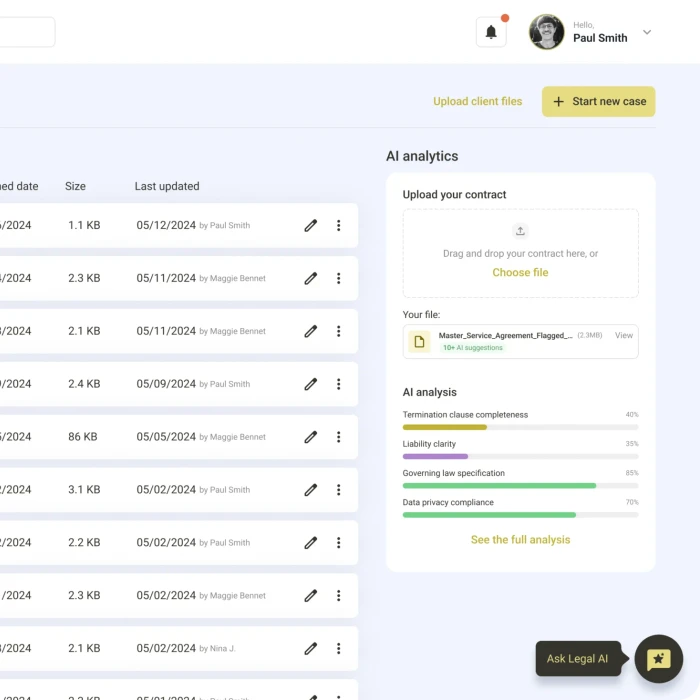
    A logistics firm worked with Aristek to streamline contract data processing. We built a legal co-pilot that extracts, analyzes, and flags risks, accelerating document workflows.

    Key achievements:

    • 60% less time spent on reviews
    • 90% accuracy in risk detection
    • 50% faster legal operations
    Explore project
    Slide 1: Preview of project 1
    Slide 1: Image of project 2
  • AI assistant for safer veterinary surgeries

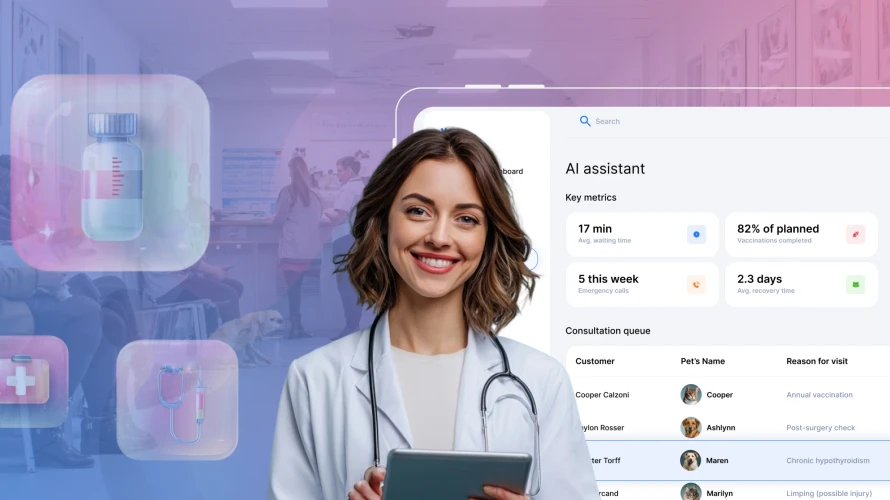
    A US vet clinic network needed faster, safer workflows for complex surgeries. Aristek analyzed patient data and workflows, building automated pipelines that deliver real-time anesthesia protocols, post-op instructions, and triage guidance.

    Key results:

    • 90% and more accuracy in anesthesia dosage calculations
    • 30% reduction in surgical prep time
    • 24% increase in vet team productivity
    Explore project
    Slide 2: Preview of project 1
    Slide 2: Image of project 2
  • AI-powered vehicle inspection system for defect detection

    A UK-based technology company developing automated inspection systems for major car manufacturers needed to improve accuracy, speed, and scalability. We optimized the machine learning pipeline, restructuring model training and simplifying system architecture.

    Key results:

    • 95% inspection coverage per vehicle
    • 50% reduction in inspection errors
    • Faster and more stable real-time processing
    Explore project
    Slide 3: Preview of project 1
    Slide 3: Image of project 2
  • AI assistant for analytical dashboards

    For a US logistics company, we created an AI-powered assistant that works inside analytical dashboards. It interprets user queries with high accuracy, generates insights faster, and helps managers optimize resources, processes, and strategy.

    Key results:

    90%+ accuracy in query interpretation

    50% faster insight generation

    40% more active dashboard users

    Explore project
    Slide 4: Preview of project 1
    Slide 4: Image of project 2

Bring your use case – we’ll break it down and show what’s worth building.

See how an LLM would actually work in your process before you commit.

How your core processes change with LLM integration services

They become faster, more structured, and less dependent on manual effort.

1

Employees manually searching across documents, tickets, and systems

→ Relevant answers are generated with context from connected data sources

2

Repetitive manual processing of documents and requests

→ Automated handling with structured outputs ready for review or action

3

Inconsistent responses depending on the employee or situation

Standardized outputs aligned with defined rules and business logic

4

Isolated knowledge stored across teams and tools

A unified access layer where information is retrieved and used consistently

5

Disconnected systems where data must be manually transferred

Integrated workflows where LLMs interact directly with enterprise applications

6

Slow response times in customer or internal support processes

Faster resolution supported by AI-generated drafts and recommendations

How your core processes change with LLM integration services

They become faster, more structured, and less dependent on manual effort.

  • Employees manually searching across documents, tickets, and systems

    → Relevant answers are generated with context from connected data sources

  • Repetitive manual processing of documents and requests

    → Automated handling with structured outputs ready for review or action

  • Inconsistent responses depending on the employee or situation

    → Standardized outputs aligned with defined rules and business logic

  • Isolated knowledge stored across teams and tools

    → A unified access layer where information is retrieved and used consistently

  • Disconnected systems where data must be manually transferred

    → Integrated workflows where LLMs interact directly with enterprise applications

  • Slow response times in customer or internal support processes

    → Faster resolution supported by AI-generated drafts and recommendations

  • Slow response times in customer or internal support processes

    → Faster resolution supported by AI-generated drafts and recommendations

How we deliver and control LLM solutions

LLM integration requires a structured approach that ensures reliability, scalability, and control at every stage. We follow a defined process that covers the following:

  • Step 1. Discovery and use case definition

    • Business process and workflow analysis
    • Identification of high-impact use cases
    • Definition of success metrics and constraints
  • Step 2. Prototype and proof of value

    • Rapid prototyping in a controlled environment
    • Testing with real or representative data
    • Validation of expected outcomes
  • Step 3. Integration with systems and data

    • Integration with enterprise applications and APIs
    • Context retrieval from internal data sources
    • Workflow orchestration and automation logic
  • Step 4. Validation and performance control

    • Definition of evaluation metrics and benchmarks
    • Output validation and testing scenarios
    • Monitoring of accuracy and consistency
  • Step 5. Security and governance

    • Data privacy and secure data handling
    • Access control and usage policies
    • Compliance with internal and external requirements
  • Step 6. Deployment and continuous improvement

    • Data privacy and secure data handling
    • Access control and usage policies
    • Compliance with internal and external requirements

Aristek – your trusted partner for LLM integration

Here are the reasons to collaborate with us for LLM integration services:

  • Icon of card 1

    Deep industry expertise

    6+ years of AI and DS experience across various industries, applying AI data strategies that work in real-world business contexts.

  • Icon of card 2

    Security & compliance

    Aligned with the EU AI Act, GDPR, HIPAA, and SOC 2, with additional controls for LLM-specific risks such as prompt injection, data leakage, and output validation.

  • Icon of card 3

    Expert and committed team

    95% hold BSs, MScs, or PhDs, and 86% have 5+ years with us – a cohesive team combining vast expertise with proven collaboration.

  • Icon of card 4

    Long-term partnership

    A trusted ally that guides your AI initiatives end-to-end, turning concepts into practical, high-impact solutions beyond just execution.

  • Icon of card 5

    Project accelerators

    Fast-track AI adoption with proven frameworks, templates, and tools that deliver measurable business outcomes.

  • Icon of card 6

    In-house AI R&D department

    Hands-on research and testing that bridges technical possibilities with business goals, reducing uncertainty before full-scale development.

Want to know what it would cost to implement your use case?

We’ll give you a realistic estimate based on your workflows and systems.

Frequently Asked Questions

Using tools like ChatGPT typically means working with standalone interfaces and generic models that are not connected to your systems or data. This limits their usefulness to isolated tasks and requires manual effort to apply results in real workflows.

LLM integration embeds models into your existing systems and processes. Outputs are generated with access to internal data, validated against business rules, and directly used in workflows. This is what makes the results consistent, scalable, and operational – which is the main focus of our LLM integration solutions.

At the initial stage, the key inputs are a clear understanding of your business processes and access to representative data or systems where LLMs could be applied. You do not need a fully defined AI strategy before starting.

During the discovery phase, we help identify suitable use cases, assess data readiness, and define the technical approach. This is a standard part of our LLM services, allowing the project to start with realistic scope and measurable objectives.

Reliability is achieved through a combination of system design decisions rather than relying on the model alone. This includes context retrieval from trusted data sources, structured prompts, and defined validation mechanisms.

We also implement evaluation metrics, testing scenarios, and monitoring to track performance over time. Where required, human-in-the-loop workflows are added to ensure outputs meet business and compliance standards.

Security is built into the architecture from the beginning, not added at the end. This includes controlled data access, secure data handling, and alignment with your internal policies and regulatory requirements.

Depending on your environment, solutions can be deployed in cloud, hybrid, or on-premise setups. As part of our enterprise LLM integration services, we also implement access controls, monitoring, and governance mechanisms to ensure ongoing compliance.

Timelines depend on the complexity of the use case, the level of integration required, and data availability. In most cases, an initial proof of value can be developed within a few weeks.

Moving to production typically involves additional stages such as integration, validation, and governance setup. The process is structured to deliver incremental results while reducing risk at each step.

Impact is measured based on the specific workflow and objectives defined during the discovery phase. Typical metrics include time savings, reduction in manual effort, improved consistency of outputs, and faster turnaround times.

As an LLM company, we define these metrics upfront and track them during and after deployment. This ensures that the solution is evaluated based on measurable outcomes rather than assumptions.

LLM integration is the process of embedding large language models into business systems and workflows so they can operate on real data and support actual tasks. This includes connecting the model to internal knowledge sources, defining how it interacts with other systems, and controlling how outputs are generated and used.

Unlike standalone tools, integration ensures that LLMs become part of day-to-day operations. As an LLM company, we treat this as system design, where the model, data, and business logic work together.

Trusted providers are typically those who focus not only on model capabilities but also on system design, data integration, and reliability in production environments. Experience with real workflows, security requirements, and long-term support is often a stronger indicator than model-specific expertise.

When evaluating an LLM company, it’s important to look at how they approach integration, validation, and scalability – not just their ability to build prototypes or demos.

The cost depends on the complexity of the use case, the number of systems involved, and the level of customization required. A focused use case with limited integration will cost less than a multi-system solution deployed across teams.

Most projects are structured in stages, starting with discovery and validation, followed by integration and scaling. Our LLM services are designed this way to give visibility into scope, effort, and expected outcomes before full implementation.

AI doesn’t become useful on its own. It works when the system around it is designed correctly.
We build the layer between models and real-world applications—the part most teams skip, and where systems either hold up or break.

Coordinating models, data, and services into reliable workflows—not isolated calls, but systems that behave predictably under load.

Grounding outputs in real data—connecting models to the right context, at the right time, with traceable sources.

Measuring what matters—accuracy, consistency, and failure modes—so systems can be tested, improved, and trusted.

Built-in auditability, compliance, and human oversight—so systems can operate in environments where correctness isn’t optional.

We use third-party cookies to improve your experience with aristeksystems.com and enhance our services. Click either 'Accept' or 'Manage' to proceed.