Aristek Systems
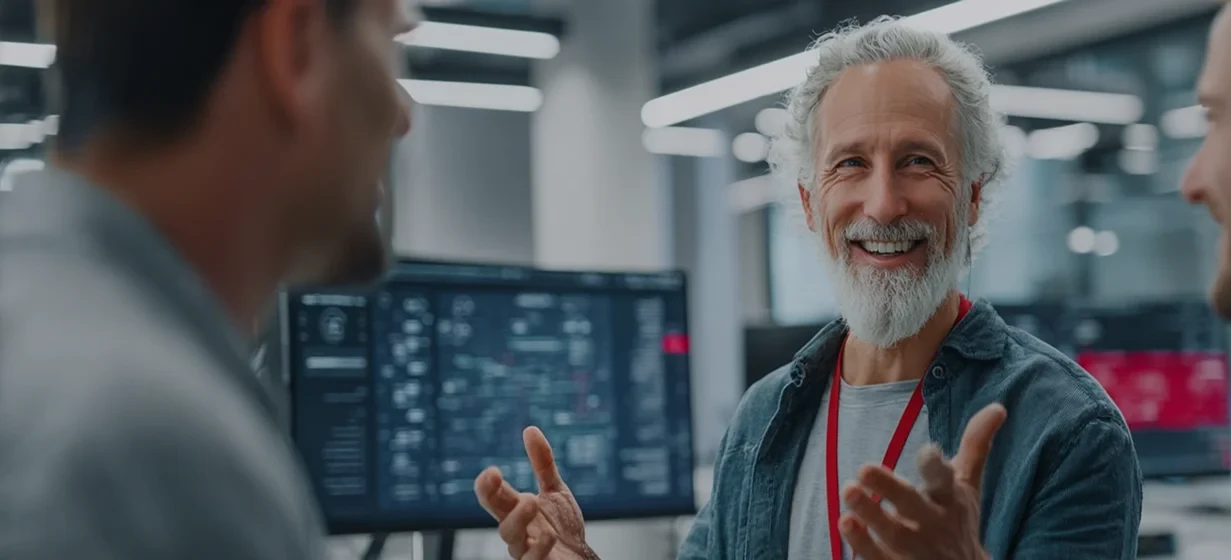
Background image
AI Generated image: Background image
Ai generated

Manufacturing Software Development

Your manufacturing software should fit the process – not force the process to fit the software.

Aristek develops custom manufacturing software, modernizes legacy applications, and connects existing systems for manufacturers with production planning, shop-floor operations, quality, and traceability, and other processes.

13+

years of software dev expertise

40+

clients worldwide

160+

in-house employees

When custom manufacturing software makes sense

Custom manufacturing software makes sense when the software itself is limiting how the operation works.

  • Custom software may be the right choice when:

    • A critical production or quality workflow cannot be supported by standard software.

    • Teams depend on spreadsheets, duplicate data entry, or manual reconciliation to fill software gaps.

    • Several systems need reliable data exchange and existing integrations are insufficient.

    • Legacy architecture makes changes difficult, expensive, or risky.

    • A proprietary planning, production, or quality process requires specialized software.

    • A specific business requirement has no suitable packaged solution.

    Learn more
  • Custom software may not be needed when:

    • Standard ERP or MES functionality already covers the requirement.

    • Configuration can provide the required functionality.

    • The main problem comes from the process rather than the software.

    • Users need better training or adoption rather than new functionality.

    • The required change would add complexity without a clear operational benefit.

    • A standard product meets the requirement with reasonable configuration and cost.

    Learn more
Image 1
Image 2
Image 3

Software built around manufacturing operations

Different manufacturing problems require different types of software.

We build applications for production and shop-floor operations, manufacturing management, and quality and traceability, focusing on the workflows each system needs to support.

Have a manufacturing system that needs to change?

Tell us what needs to work differently, and we can discuss the right development approach for your existing software environment.

Our manufacturing software development services

Manufacturing software often accumulates years of business rules, integrations, and operational changes.

Our manufacturing software development services help manufacturers extend that software, replace parts of it, modernize its architecture, and connect it with newer systems.

Projects we’ve delivered

Across our projects, we solve software problems that involve complex requirements, multiple systems, and long-term operational needs.

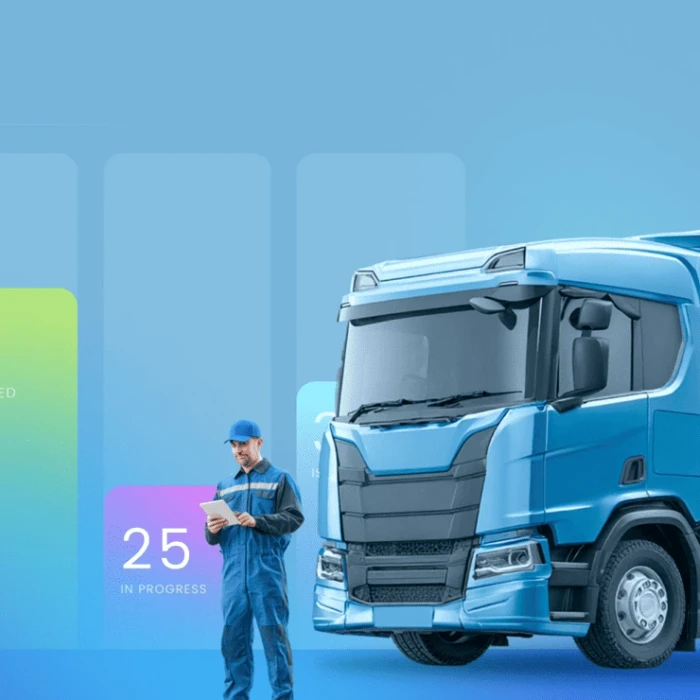
  • AI-powered vehicle inspection system with real-time processing

    A UK technology company developing inspection systems for automotive manufacturers needed higher accuracy and stable performance.

    We improved the machine learning pipeline and redesigned parts of the system architecture to support real-time processing and consistent performance under load.

    Key results:

    • 95% inspection coverage per vehicle
    • 50% reduction in detection errors
    • Faster and more stable processing
    Explore project
    Slide 0: Preview of project 1
    Slide 0: Image of project 2
  • AI-driven ground handling intelligence solution for a leading logistics provider

    Our team conducted a data readiness assessment, built scalable ingestion pipelines, consolidated 100M+ operational records, and launched a pilot AI model for predicting flight delay.

    Key results:

    • 200+ engineered time-series features per turnaround
    • 100M+ event records consolidated into an enterprise-grade AI-ready dataset
    • >95% event-to-flight mapping accuracy
    Explore project
    Slide 1: Preview of project 1
    Slide 1: Image of project 2
  • Implementing an advanced ERP for Radius, a top US logistics company

    We delivered this project for Radius, the US transportation and logistics company. Aristek united all the client’s processes in one convenient application.

    Key results:

    • 23% improve in productivity
    • 31% decrease in fuel expenditure
    Explore project
    Slide 2: Preview of project 1
    Slide 2: Image of project 2
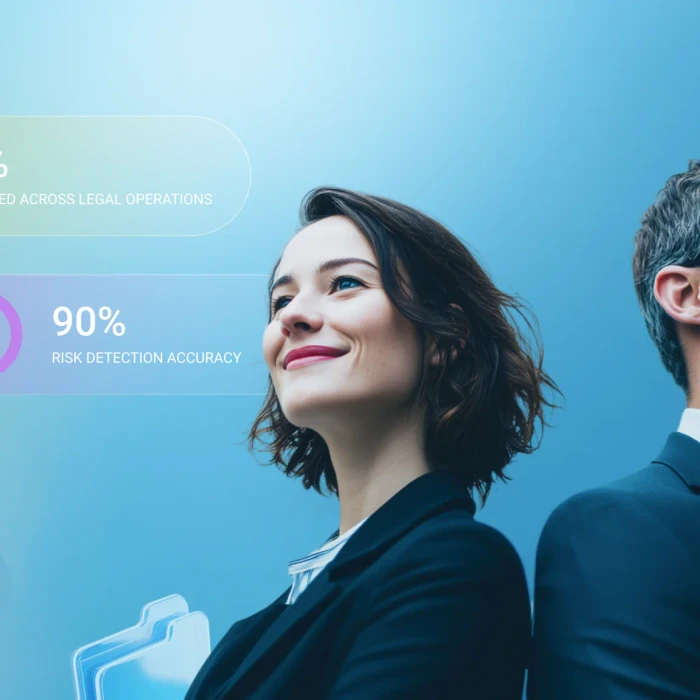
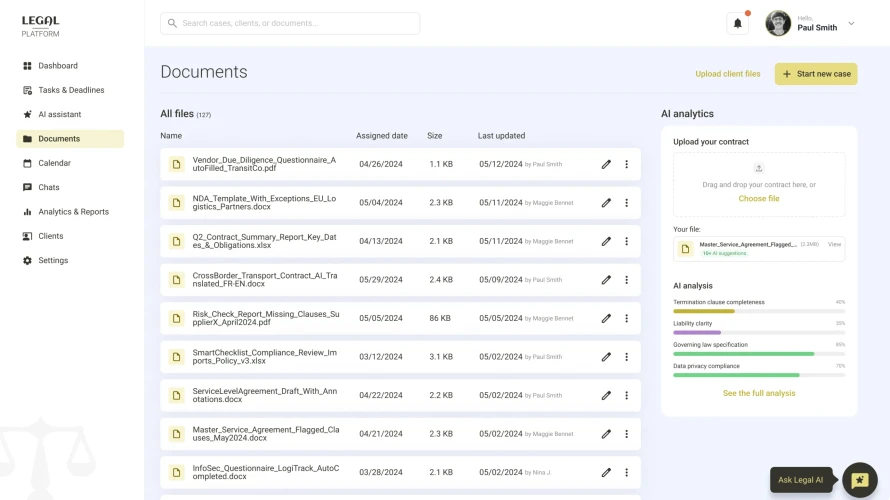
  • AI co-pilot for legal teams with traceable outputs

    A logistics company needed to process contract data faster and reduce manual review.

    We built a co-pilot that extracts key information, analyzes content, and flags potential risks within documents, supported by an architecture that ensures traceability and consistent output validation.

    Key results:

    • 60% reduction in review time
    • 90% accuracy in risk detection
    • 50% faster legal workflows
    Explore project
    Slide 3: Preview of project 1
    Slide 3: Image of project 2

Why companies work with Aristek

Complex software work requires strong engineering across systems, data, integrations, and long-term support. Here is what Aristek brings to that work.

  • Icon of card 1

    Complex software requirements

    For 13+ years, 13+ years of work with complex systems means experience with the issues that emerge at scale – data flows, permissions, integrations, and system performance – and the architecture decisions needed to handle them.

  • Icon of card 2

    Expert team

    95% of our employees hold BS, MSc, or PhD degrees; 88% are Senior or Middle-tier developers, and 87% have worked with Aristek for 5+ years.

  • Icon of card 3

    Full-cycle delivery

    One team can carry the work from discovery through support, keeping architecture, development, integration, and delivery decisions aligned.

  • Icon of card 4

    Data & AI capabilities

    Our R&D team validates new technologies, backed by 6 years of AI experience. Our AI Control Tower solution shows how this work can apply to manufacturing.

  • Icon of card 5

    Existing-system expertise

    We work with legacy applications, ERP environments, and existing integrations when replacing the current landscape is not the right option.

  • Icon of card 6

    Long-term ownership

    87% of our clients have worked with Aristek for 5+ years. Long-term engagements cover maintenance, enhancements, integrations, upgrades, and new functionality as requirements change.

The result of our R&D work is AI Control Tower solution for manufacturing

See how six specialized AI agents can simulate production scenarios, surface issues, structure escalations, and route high-stakes decisions to human approval.

Explore →
  • Image of slide 1
Explore →

Custom, hybrid, or off-the-shelf?

You can configure standard software, extend it with custom development, or build a dedicated system. The right choice depends on where custom development adds real value.

Off-the-shelf / configured

Hybrid

Fully custom

Best for established, standard processes
Best when standard software covers most needs but specific gaps remain
Best for highly specialized or proprietary requirements
Lower implementation effort
Moderate implementation effort
Higher implementation effort
Flexibility limited by the product
Custom development where it adds the most value
Software can be designed around the required workflows
Integration depends on available interfaces
Custom integrations can connect selected systems and functions
Architecture can be designed around required integrations
Scalability depends on the product
Depends on both standard and custom components
Scalability can be planned around expected growth
Greater dependence on the product vendor
Vendor dependence can be reduced in selected areas
Greater control over the application and its roadmap
More predictable when requirements fit the product
Total cost of ownership depends on both layers
Total cost of ownership depends heavily on scope, maintenance, and ownership
Image 1
Image 2
Image 3

What can we integrate across your manufacturing systems?

ERP, MES, PLM, WMS, QMS, equipment, and analytics systems often hold different parts of the same production process. We bring the relevant data together so teams can work from current information instead of reconciling separate records.

  • ERP / MRP

    Link orders, BOMs, materials, inventory, procurement, and production schedules with shop-floor activity.

  • MES

    Share work orders, production results, operation status, and machine events with planning, quality, inventory, and reporting systems.

  • PLM

    Move product definitions, specifications, BOMs, and approved engineering changes into downstream manufacturing systems.

  • WMS

    Keep inventory movements, material issues, receipts, and warehouse status aligned with production and planning.

  • CRM

    Transfer customer requirements and order data into the systems used for planning and production.

  • Equipment & IoT

    Bring equipment status, production events, and process data into applications for monitoring, maintenance, and quality.

  • Analytics & BI

    Combine ERP, MES, WMS, QMS, and equipment data for production, quality, inventory, and maintenance analytics.

We engineer software for reliability, security & scale

Reliability comes first: we design for failures, secure access, controlled integrations, and safe recovery from the start. Here is how we approach reliability in practice:
Icon of item 1

Applications account for dependency failures, unavailable ERP/MES systems, failed integration messages, interrupted device communication, and missing production data.

Icon of item 2

Application monitoring and structured logging provide visibility into system health, integration status, processing errors, and operational events.

Icon of item 3

Retry logic, restart procedures, rollback mechanisms, and defined recovery paths help restore critical workflows after application or integration failures.

Icon of item 4

Authentication, authorization, and role-based access control restrict manufacturing functions, production data, and administrative operations to authorized users and services

Icon of item 5

OT network segmentation and controlled communication between operational and enterprise systems help limit unnecessary exposure between production and IT environments where required.

Icon of item 6

APIs, data exchanges, and system-to-system communication use appropriate authentication, authorization, and secure data handling controls.

Icon of item 7

Application architecture accounts for growth in users, production lines, facilities, data volume, and integration load without unnecessary redesign.

Icon of item 8

Deployment, upgrades, and infrastructure changes are planned around production dependencies to minimize disruption and support controlled recovery when changes fail.

Our manufacturing software development process

Our development process starts with the existing software landscape and production requirements, then carries those constraints through architecture, development, testing, and rollout.

1. Discovery & requirements analysis

Map processes, systems, integrations, priorities, and constraints.

Deliverables: Requirements, process maps, system landscape, integration needs.

2. Architecture

Define the application architecture, technology approach, integrations, and data ownership.

Deliverables: Target architecture, integration approach, technical decisions.

3. UX/UI & technical design

Design interfaces and application behavior around user roles, workflows, and operational conditions.

Deliverables: UX/UI designs, user flows, technical specifications.

4. Development & integration

Build the application, APIs, connectors, data processing, and required integrations.

Deliverables: Working software, integrations, data components.

5. Testing & validation

Test application behavior, data flows, integrations, edge cases, and failure scenarios.

Deliverables: Test results, validated integrations, resolved defects.

6. Deployment

Launch through an MVP, pilot, phased rollout, or parallel run where appropriate.

Deliverables: Deployment plan, production environment, validated release.

7. Support & evolution

Maintain the application, resolve incidents, update integrations, and add functionality as requirements change.

Deliverables: Ongoing support, updates, integration changes, continued development.

Bring us the workflow, system, or integration that is holding your team back.

We’ll help you determine whether to configure, extend, modernize, integrate, or build.

Frequently Asked Questions

AI can support predictive maintenance, production forecasting, anomaly detection, computer vision quality control, and operator assistance within existing manufacturing applications. AI models can also feed production planning and monitoring workflows, with human-in-the-loop review where decisions require human approval.

Custom manufacturing software can reduce manual workarounds, support proprietary workflows, and provide targeted integrations where standard products leave gaps. It also gives manufacturers greater control over how the application changes as processes and operational requirements change.

The cost of custom manufacturing software development depends on the number of workflows, integrations, legacy systems, data migration requirements, UX complexity, security requirements, deployment model, and ongoing support. The required level of total cost of ownership should also be assessed alongside the initial development scope.

Start with standard ERP or MES functionality and configure it around the actual process. If a real capability gap remains, custom development can extend the system before considering a dedicated application; this approach keeps manufacturing software development focused on requirements that justify it.

The transition should cover source-code ownership, repositories, documentation, infrastructure access, credentials, database ownership, deployment procedures, and knowledge transfer according to the contractual arrangements. A structured handover also reduces vendor lock-in and gives the incoming team enough technical context to maintain the application safely.

Yes. Manufacturing software development services can start with a technical assessment covering the codebase, architecture, dependencies, documentation, infrastructure, and backlog. We can stabilize the existing application first and then plan further development, modernization, or integration work.

Manufacturing software development consulting starts with a discovery workshop to define scope, workflows, system dependencies, integrations, and technical constraints. We then assess the architecture and integration effort, define the delivery scope, estimate the work, and propose a phased plan where appropriate.

Yes. Custom industrial software development can connect PLC, HMI, SCADA, equipment, MES, ERP/MRP, WMS, and analytics systems using the interfaces and communication methods required by the environment, including OPC UA and MQTT where applicable. The architecture can also use edge computing where equipment data needs to be processed close to the shop floor.

Yes. Our manufacturing software application development work can support discrete manufacturing as well as process and batch manufacturing, depending on the required workflows and system landscape. Solutions can cover manufacturing management software development, production scheduling, BOM management, traceability, quality processes, and related operational applications.

We use third-party cookies to improve your experience with aristeksystems.com and enhance our services. Click either 'Accept' or 'Manage' to proceed.