Aristek SystemsContact Us
background image
background image

AI Integration Services

AI model selection without lock-in. We evaluate and compare models, design the architecture, and integrate AI into your systems with cost, performance, and scalability in mind.

6+

years of AI development experience

23+

years in tech consulting

40+

clients worldwide

Icon of Certificate 1Icon of Certificate 2Icon of Certificate 3Icon of Certificate 4Icon of Certificate 5Icon of Certificate 6Icon of Certificate 7Icon of Certificate 8Icon of Certificate 9

AI integration starts with architecture

AI integration is not only about adding capabilities. Model selection and system design directly influence cost, stability, and long-term flexibility.

  • How AI is often approached

    • Select a model based on benchmarks
    • Build a feature around it
    • Launch quickly
    • Address performance or cost issues later
  • What poor architecture leads to

    • Escalating inference costs as usage grows
    • Extended refactoring cycles when switching models
    • Vendor dependency on a single AI provider
    • Latency bottlenecks under production load
  • What changes when architecture comes first

    • Models evaluated in system context
    • Cost and latency tested under scale
    • Clear separation between model and business logic
    • Ability to replace or upgrade models without refactoring the system

    → This approach reduces future refactoring, protects cost predictability, and keeps your system adaptable as AI technologies change.

How we approach AI integration

Relying on us means our AI integration follows proven methods that avoid the pitfalls of typical approaches.

Image

Typical market approach

  • Proprietary AI platform
  • Vendor-driven stack
  • Lock-in via ecosystem
  • One-model dependency
  • AI as project

Our approach

  • Model-agnostic architecture
  • Business-driven stack
  • Replaceability by design
  • Multi-model strategy
  • AI as capability

Where architecture-first AI integration matters most

  • Icon of card 1

    SaaS companies adding AI features

    Teams introducing their first AI-driven capabilities and aiming to avoid architectural constraints from the start.

  • Icon of card 2

    Mid-size technology firms scaling AI

    Organizations already using AI that need better cost control, performance stability, and model flexibility.

  • Icon of card 3

    Enterprises building AI-first systems

    Companies designing AI as a structural part of their products, requiring governance, observability, and long-term adaptability.

  • Icon of card 4

    Product teams seeking vendor independence

    Teams that want to retain negotiation power and avoid tight coupling to a single AI provider.

If AI integration is on your roadmap, we can help

Even if your case isn’t described above, we’ll evaluate your current setup and recommend the next steps.

Our AI integration engagement models

AI integration needs differ depending on system maturity and long-term objectives. We structure our work into focused programs aligned with your current stage.

  • AI model fit assessment

    For teams evaluating 3-4 models before production integration.

    • Benchmark analysis in business context
    • Structured sandbox testing
    • Output consistency and schema validation
    • Latency and cost snapshot under expected load
    • Written recommendation report with implementation guidance


    Timeline: 2–3 weeks

    Outcome: Clear understanding of which model fits your architecture, cost expectations, and long-term flexibility requirements.

  • AI stack architecture review

    For organizations already running AI in production.

    • Model abstraction and coupling analysis
    • Integration boundary and fragility review
    • Routing and orchestration assessment
    • Cost optimization opportunities
    • Monitoring, governance, and gap identification
    • Evolution readiness evaluation


    Timeline: 3–5 weeks

    Outcome: Improved architectural clarity, reduced dependency risk, and a defined path for stable scaling.

  • AI evolution strategy

    For companies building AI as a structural product capability.

    • Multi-model strategy design
    • Replaceability-oriented architecture planning
    • Cost-aware orchestration framework
    • Governance and observability blueprint
    • 12-month AI roadmap


    Timeline: 6–8 weeks

    Outcome: A long-term AI integration strategy that supports growth, vendor flexibility, and predictable operational costs.

AI we’ve delivered

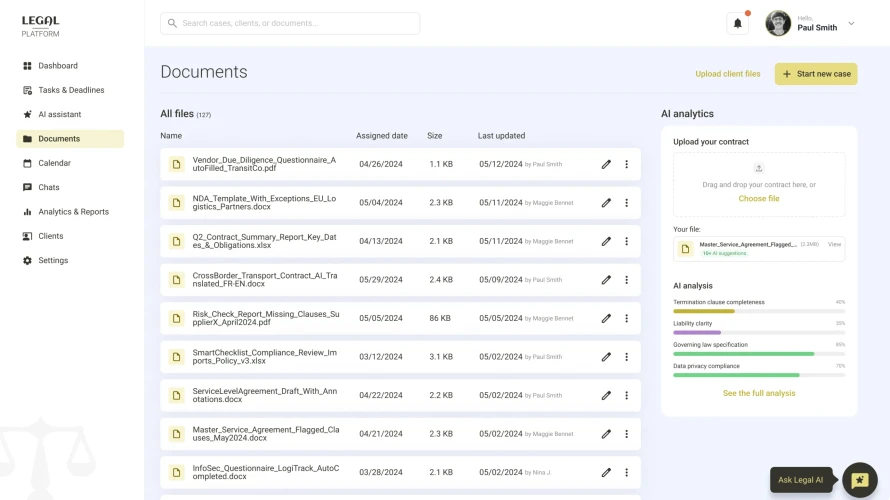
  • AI for contract review

    Our team integrated AI into our customer’s processes to automate legal operations, such as routine contract reviews and risk detection.

    Key results:

    • 60% less time spent on routine contract reviews
    • 90% accuracy in risk detection
    • 50% time saved across legal operations
    Explore project
    Slide 0: Preview of project 1
    Slide 0: Image of project 2
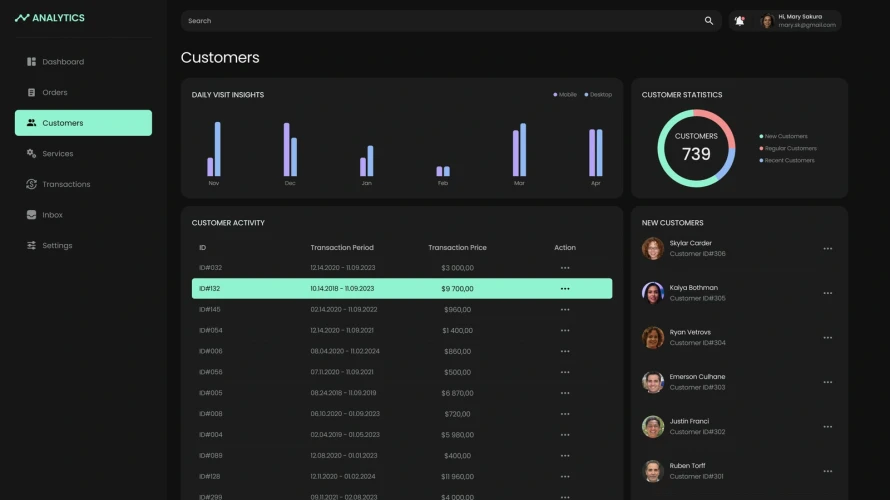
  • AI for real-time decision-making

    We developed an AI assistant that integrates directly with their analytics dashboards. It interprets user queries accurately, generates actionable insights faster, and helps managers optimize processes and resources.

    Key results:

    • Over 90% accuracy in query interpretation
    • Insight generation completed 50% faster
    • 40% increase in active dashboard usage
    Explore project
    Slide 1: Preview of project 1
    Slide 1: Image of project 2
  • AI-driven question-answering system for learners

    Our team developed an AI-driven question-answering system for an eLearning platform that has revolutionized a wide range of application areas simultaneously. The solution helped achieve the following results:

    • 24/ 7 availability for student support;
    • >1000 requests per minute handles the system;
    • +5 points the customer grew the platform’s NPS.
    Explore project
    Slide 2: Preview of project 1
    Slide 2: Image of project 2
  • AI-based behavior analysis & sales forecast for a giant retailer

    A retail giant with 3 million customers sought to leverage their user data for sales forecasting. We used AI to analyze customer behavior and store insights, delivering actionable sales forecasts.

    Key figures:

    • 7% visitors-to-buyers conversion rate increase
    • 15% volume of data collected increase
    • 35% monthly infrastructure costs decrease
    Explore project
    Slide 3: Preview of project 1
    Slide 3: Image of project 2
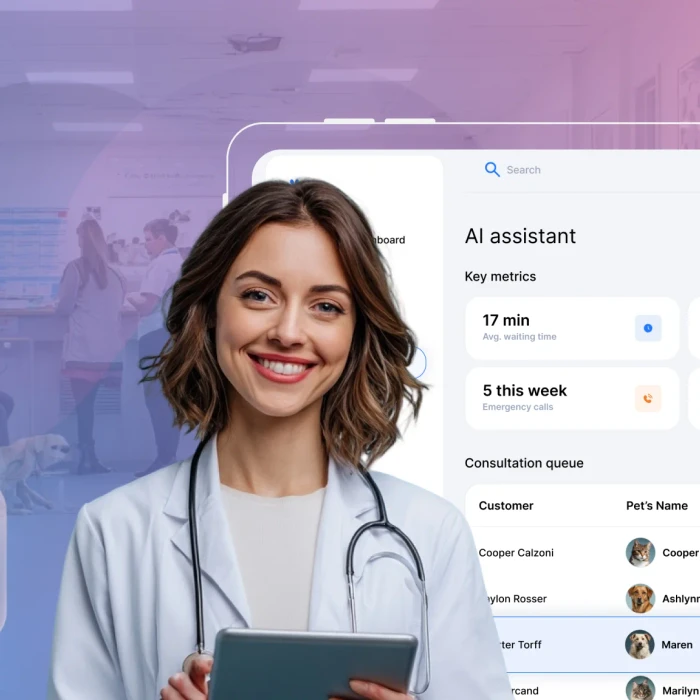
  • AI assistant for safer veterinary surgeries

    A US vet clinic network needed faster, safer workflows for complex surgeries. Aristek analyzed patient data and workflows, building automated pipelines that deliver real-time anesthesia protocols, post-op instructions, and triage guidance.

    Key results:

    • 90% and more accuracy in anesthesia dosage calculations
    • 30% reduction in surgical prep time
    • 24% increase in vet team productivity
    Explore project
    Slide 4: Preview of project 1
    Slide 4: Image of project 2
  • AI chatbot for an eLearning SaaS platform

    A SaaS eLearning platform wanted to automate their customer support. We developed a chatbot that takes care of routine tasks and helps support specialists handle complex tickets.

    Project results:

    • Reduced the need for year-round inflated staffing
    • Shorter resolution time
    • Detailed and contextually relevant replies
    Explore project
    Slide 5: Preview of project 1
    Slide 5: Image of project 2

Our AI integration framework

We follow a clear process to evaluate models, design architecture, and integrate AI systems that remain flexible as technologies evolve:

  • Model evaluation in context

    • Benchmark signal analysis
    • Real use-case testing
    • Structured output validation
    • Latency simulation under load
    • Cost modeling at scale
    • Replaceability assessment
  • Architecture built for replaceability

    • Clear separation of business logic, model layer, routing, and validation
    • Model abstraction layer
    • Multi-model routing
    • Fallback logic
    • Structured output validators
    • Cost-aware decision engine
  • Integration with observability

    • Backend and workflow integration
    • Data pipeline adaptation
    • Observability and monitoring
    • Evaluation and regression pipelines
    • Governance controls
  • Evolution planning

    • Upgrade impact analysis
    • Vendor flexibility strategy
    • Scaling scenarios
    • Cost forecasting under growth
    • Long-term architectural flexibility

Aristek can integrate AI into any workflow, user, department

  • Icon of card 1

    Executive leadership

    • Performance tracking and forecasting
    • Data-driven decision support
    • Resource allocation optimization.
  • Icon of card 2

    Marketing

    • Audience segmentation and targeting
    • Campaign performance analysis
    • Personalized content recommendations
    • Sentiment and trend analysis.
  • Icon of card 3

    Sales

    • Lead scoring and qualification automation
    • AI for customer behavior predictions
    • Sales forecasting
    • Recommendation of upsell and cross-sell opportunities.
  • Icon of card 4

    Finance

    • Real-time fraud detection and prevention
    • Cash flow and expense forecasting
    • Spend analytics and cost optimization.
  • Icon of card 5

    Human resources (HR)

    • Automated resume screening and ranking
    • Employee engagement tracking
    • Attrition prediction and retention strategies
    • Personalized development pathways
    • Streamlined onboarding.
  • Icon of card 6

    Customer support

    • Automatic response generation
    • Priority assessment
    • Customer profiling
    • Query classification.

AI inside your development workflow

AI integration isn’t only for users – it also supports the teams building the product.

We help engineering teams integrate AI into development workflows, from code analysis and refactoring support to AI-assisted testing and documentation. The same architectural principles apply:

  • Icon of card 1

    Clear separation between AI tooling and core systems

  • Icon of card 2

    Observability and control over AI-assisted changes

  • Icon of card 3

    Cost visibility at team scale

  • Icon of card 4

    Governance where required

Not sure where to start with AI integration?

We can help you identify a high-impact use case and define clear evaluation criteria.

Frequently asked questions

AI integration is the process of embedding AI models into existing software systems so they operate as part of production workflows rather than as standalone tools.

AI system integration services typically include:

  • Evaluating models in the context of real system requirements
  • Designing an architecture that separates the model layer from business logic
  • Building routing, validation, and fallback mechanisms
  • Connecting AI to existing systems such as CRM, ERP, data platforms, or internal applications
  • Adding monitoring and cost tracking for production usage

The goal is not just to add AI capabilities, but to ensure the system remains stable, observable, and replaceable as models change.

Common challenges include:

  • Data readiness – AI does not always require perfectly structured data, but data still needs preparation, cleaning, or pipeline adjustments to ensure consistent results.
  • Integration with existing systems – connecting AI to legacy infrastructure may require architectural changes to ensure stable and secure operation.
  • Model coupling – tightly linking business logic to a specific model can make future updates or provider changes difficult.
  • Scalability and performance – systems that work well in prototypes may face latency or stability issues under real нагрузка (load).
  • Operational cost growth – inference costs can increase quickly if usage, routing, and model selection are not planned in advance.
  • Adoption by teams – AI systems need to be designed in a way that fits existing workflows and remains intuitive, minimizing the need for additional training.
  • Organizational resistance to change – teams may hesitate to trust or adopt AI-assisted workflows without clear control and transparency.

Timelines vary based on project complexity. Timelines depend on the scope of the engagement, but most projects begin with focused evaluation or architecture work before full system deployment. We offer three packages to support this process:

  1. AI Model Fit Assessment – This package includes evaluating candidate models in the context of your architecture, testing for performance, cost, and replaceability, and providing recommendations for integration. It typically lasts 2–3 weeks.
  2. AI Stack Architecture Review – For teams already running AI in production, this package assesses model coupling, architecture fragility, routing and orchestration, and identifies cost optimization and governance gaps. It usually takes 3–5 weeks.
  3. AI Evolution Strategy – Designed for companies building AI as a structural capability, this package includes multi-model strategy planning, replaceability design, cost-aware orchestration, and a 12-month evolution roadmap. The engagement generally lasts 6–8 weeks.

More complex implementations may continue after these stages as part of a full AI system integration. We can provide a clear estimate tailored to your use case after an initial consultation – contact us to discuss your project.

The cost of AI integration varies depending on several factors, including the complexity of the solution, the number of systems involved, the type of AI models used, and the level of customization required.

Key factors that influence the cost include:

  • The scope of the integration and number of workflows involved
  • The complexity of your existing infrastructure
  • The type of AI capabilities implemented (for example, generative AI, predictive models, or automation)
  • Performance, latency, and scalability requirements
  • Governance, monitoring, and security needs

Because every system and use case is different, the exact cost is usually determined after an initial consultation and architecture review. This helps define the scope of work and provide a clear, realistic estimate.

Production AI systems are introduced gradually rather than replacing existing workflows at once.

Typical engineering practices include:

Architecture isolation so AI components remain separate from core business logic

  • Controlled rollout through staged deployment and traffic routing
  • Structured output validation to prevent unexpected model responses
  • Observability and monitoring for model behavior, latency, and cost
  • Fallback mechanisms that return control to traditional logic if needed

This approach allows AI capabilities to be introduced safely while maintaining system stability.

Yes, some of the most impactful integrations happen internally. Examples include:

  • AI copilots for support teams
  • Automated document processing
  • Code review and developer assistants
  • Internal knowledge search systems
  • Workflow automation and decision support

Internal tools often deliver faster ROI because they improve operational efficiency immediately.

As an AI integration company, we design AI layers with provider abstraction:

  • Model access behind a service layer
  • Standardized prompt templates
  • Modular retrieval pipelines
  • Swappable model endpoints

This allows organizations to switch providers or move to private models without rewriting the application.

Preview
Deploy AI analytics engine on your existing data
Generate explainable reports with ready-to-use insights.
Learn more

We use third-party cookies to improve your experience with aristeksystems.com and enhance our services. Click either 'Accept' or 'Manage' to proceed.